
Project notes · 20 apr
Building a Telemetry System for Rocketry: How We Track and Analyze Flight Data
For my role, project results, and current technical context, see the full project page.
Introduction
In rocketry, knowing what happens during a flight is just as important as making the rocket fly. That's where telemetry comes in. A telemetry system allows us to collect critical flight data in real-time, monitor the rocket's health, and analyze its performance post-flight. In this post, I'll share how we designed and built a telemetry system for our Aurora rocketry project.
Index
What Is Rocketry Telemetry?
Core Components of a Telemetry System
Designing Our System
Challenges and Solutions
Lessons Learned
Conclusion
1. What Is Rocketry Telemetry?
Telemetry is the process of measuring data from remote locations and transmitting it to a ground station. In rocketry, telemetry typically tracks:
Altitude
Velocity
Orientation (attitude)
GPS position
System health (battery voltage, temperatures, etc.)
Real-time data allows ground crews to monitor the rocket’s status and later analyze the entire flight profile.
2. Core Components of a Telemetry System
Sensors: IMU (Inertial Measurement Unit), GPS, barometric pressure sensors.
Microcontroller: Arduino or custom flight computer to collect and format data.
Radio Module: LoRa or 900MHz systems to transmit data over kilometers.
Ground Station: Laptop or embedded receiver to log and display data.
3. Designing Our System
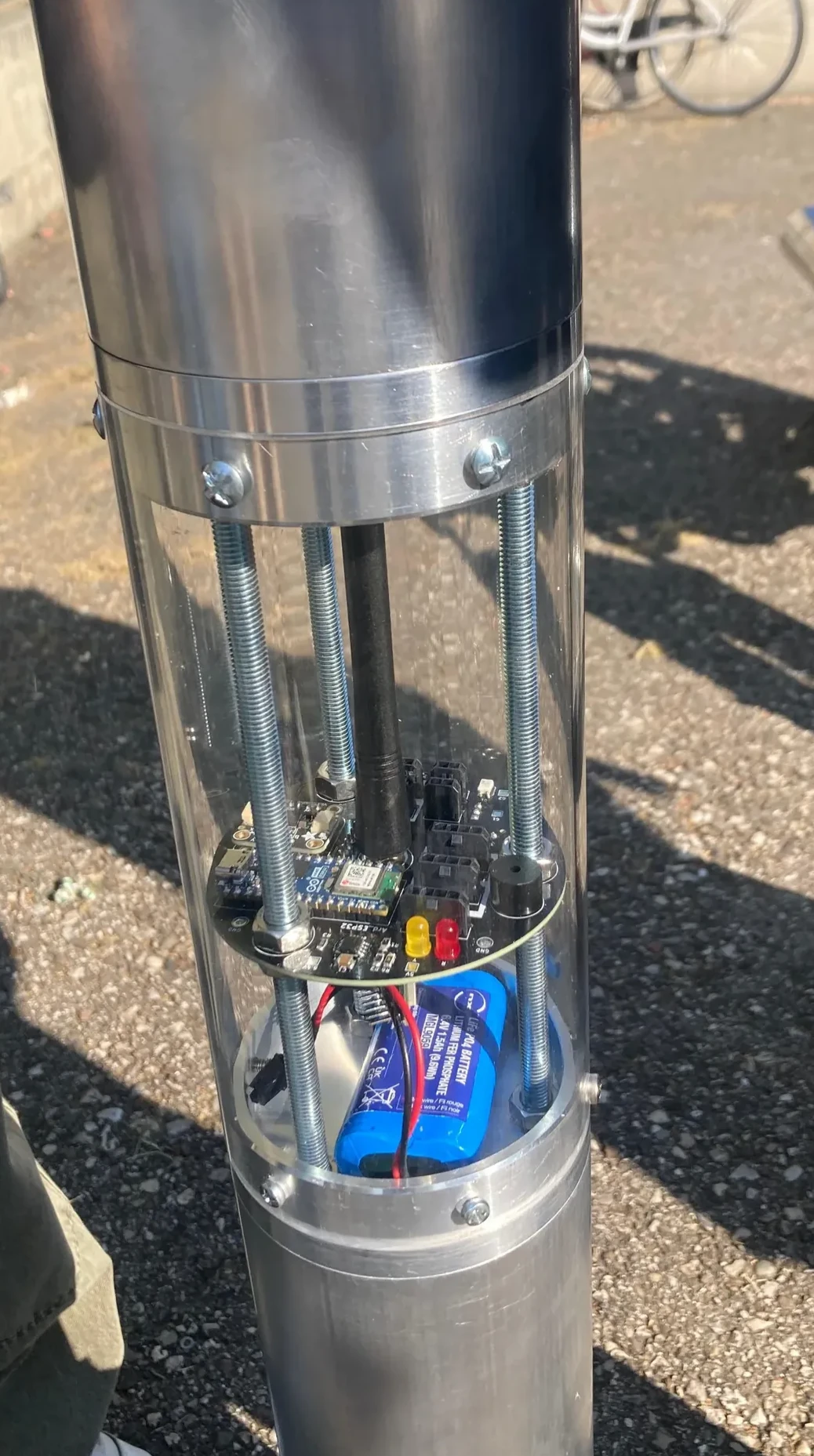
For our Aurora project, we built a lightweight and reliable telemetry system:
Microcontroller: Arduino Nano for simplicity.
Sensors: BMP280 (barometer), MPU6050 (IMU), and a GPS module.
Radio: LoRa EBYTE E220-900T22D module at 868MHz.
Data Format: Structured packets sent at 1Hz, balancing resolution and transmission stability.
All components were packed inside the avionics bay, with careful attention to shielding and antenna placement to minimize interference.
4. Challenges and Solutions
Signal Loss: Initially, range was limited. We improved it by tuning the LoRa transmission parameters (spreading factor, power output).
Noise: The IMU was affected by vibrations. We applied simple Kalman filtering on the microcontroller.
Data Corruption: Packet loss occurred in early tests. We added CRC checks to each transmission.
5. Lessons Learned
Antenna placement dramatically impacts transmission quality.
Software filtering can greatly improve sensor reliability.
Telemetry isn't just "nice to have" — it's critical for flight validation and recovery operations.
6. Conclusion
Building a telemetry system taught us the importance of reliable communication in real-time systems. It added complexity to our project, but it also gave us a priceless window into our rocket's performance.
If you’re working on your own rocketry or high-altitude projects, investing in telemetry will make a huge difference.