
Project notes · 17 ott
Understanding LoRa Antennas: A Complete Guide for Better Long-Range Communication
For my role, project results, and current technical context, see the full project page.
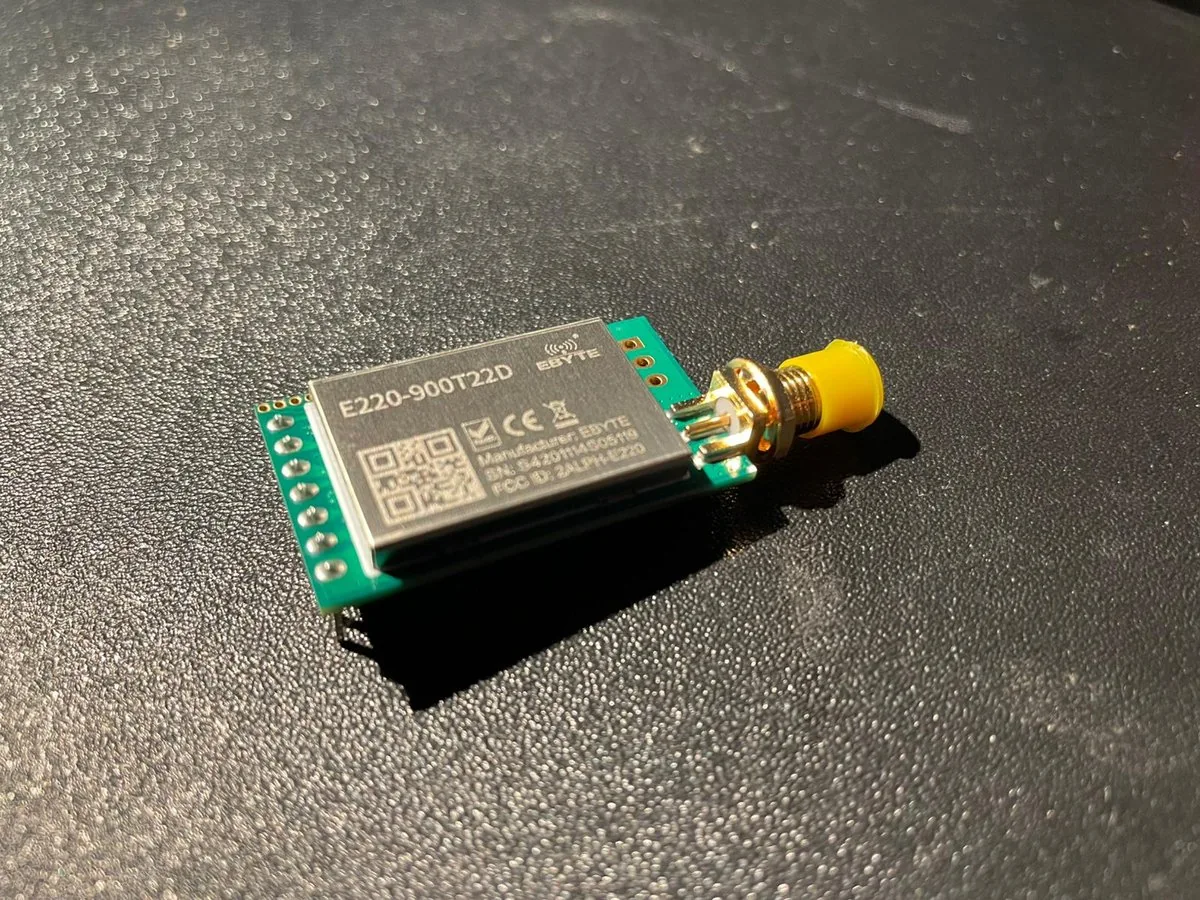
Introduction
When working with LoRa (Long Range Radio) technology, it's easy to focus only on the modules and forget one of the most critical components: the antenna. A well-chosen antenna can dramatically improve your communication range, reliability, and overall project success. In this post, I'll explain the basics of LoRa antennas, the types available, how to choose the right one, and some lessons I learned from my own projects.
Index
What is LoRa and Why the Antenna Matters
Types of LoRa Antennas
Key Characteristics to Know
How to Choose the Right LoRa Antenna
Common Mistakes and How to Avoid Them
My Experience with LoRa Antennas
Conclusion
1. What is LoRa and Why the Antenna Matters
LoRa is a low-power, long-range wireless communication technology widely used in IoT applications. It operates at sub-GHz frequencies, like 433 MHz, 868 MHz (Europe), and 915 MHz (USA).
The antenna is critical because it directly influences:
Maximum transmission distance
Signal stability and quality
Power consumption of the module
Choosing the wrong antenna can completely ruin the performance, even if the radio module is perfect.
2. Types of LoRa Antennas
PCB Antennas:
Printed directly on the circuit board.
Compact and cheap.
Lower gain and range compared to external antennas.
Whip Antennas:
Small, flexible antennas.
Good balance between size and performance.
Ideal for portable or mobile applications.
Helical Antennas:
Spring-like shape.
Compact but capable of decent range.
Often used in small IoT devices.
Yagi Antennas:
Highly directional.
Very high gain.
Best for point-to-point long-distance communication but large in size.
3. Key Characteristics to Know
Frequency: Match the antenna frequency to your module (e.g., 868 MHz in Europe).
Gain (dBi): Higher gain means better signal in a particular direction but less coverage around.
VSWR (Voltage Standing Wave Ratio): Should be as close to 1:1 as possible for efficient transmission.
Polarization: Antennas can be vertically, horizontally, or circularly polarized.
Connector Type: SMA, RP-SMA, U.FL — match it to your hardware.
4. How to Choose the Right LoRa Antenna
Ask yourself these questions:
Where will the device operate? (Urban areas? Open fields?)
How much range do I need?
Is the antenna size a constraint?
Battery-powered device? (Lower energy antennas preferred.)
Outdoor, long-range, fixed installations benefit from directional antennas (Yagi or panel), while mobile or compact devices need whip or helical antennas.
5. Common Mistakes and How to Avoid Them
Wrong Frequency: Always check your region's allowed frequencies and match the antenna.
Poor Mounting: Placing antennas too close to metal or inside sealed enclosures without consideration can kill performance.
Bad Matching: Ensure the impedance (typically 50 Ohms) matches between antenna and radio module.
6. My Experience with LoRa Antennas
While working on a telemetry system for the Aurora rocketry project, I experimented with different antennas:
Initially tried small PCB antennas but had unreliable communication beyond 500 meters.
Upgraded to a whip antenna tuned for 868 MHz with proper ground plane separation.
Result: Reliable data transmission up to 2 kilometers with stable RSSI values.
This experience taught me that even small improvements in antenna quality and positioning can lead to massive gains in range and reliability.
7. Conclusion
Choosing the right LoRa antenna is just as important as selecting the right transceiver module.
A little extra time spent understanding frequency, gain, and mounting can save a lot of frustration later.
If you want to unlock the full potential of your LoRa project, don't underestimate the antenna — it’s the bridge between your device and the world!